🌱 a people’s archive about art and culture in the struggle to build and imagine another world.
-
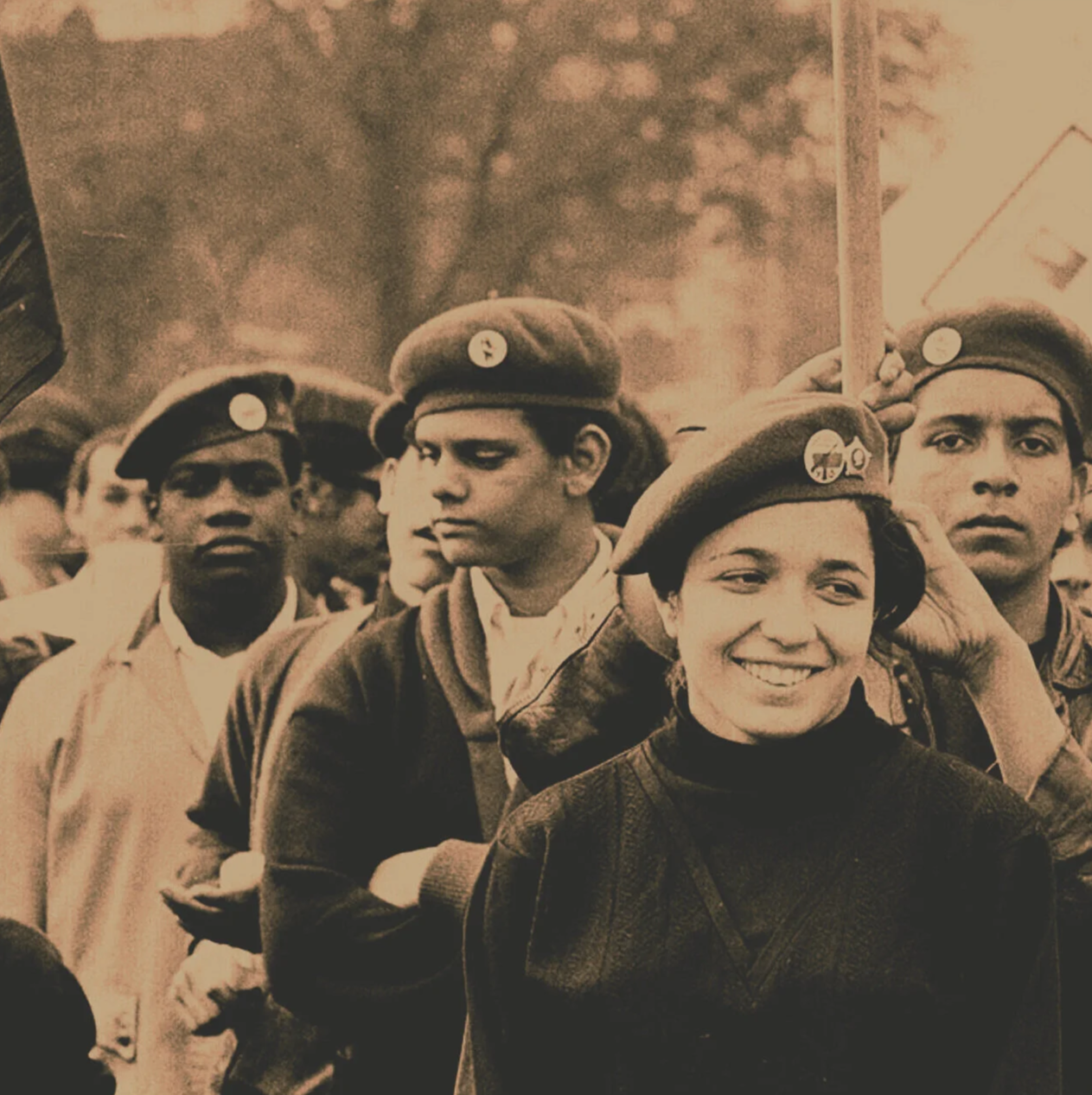
![A woman with curly hair smiling and raising her arm among a crowd of people, some of whom are also smiling, in a black-and-white photo with a blue overlay.]()
Toward A Third Cinema
SOLANAS & GETINO
-
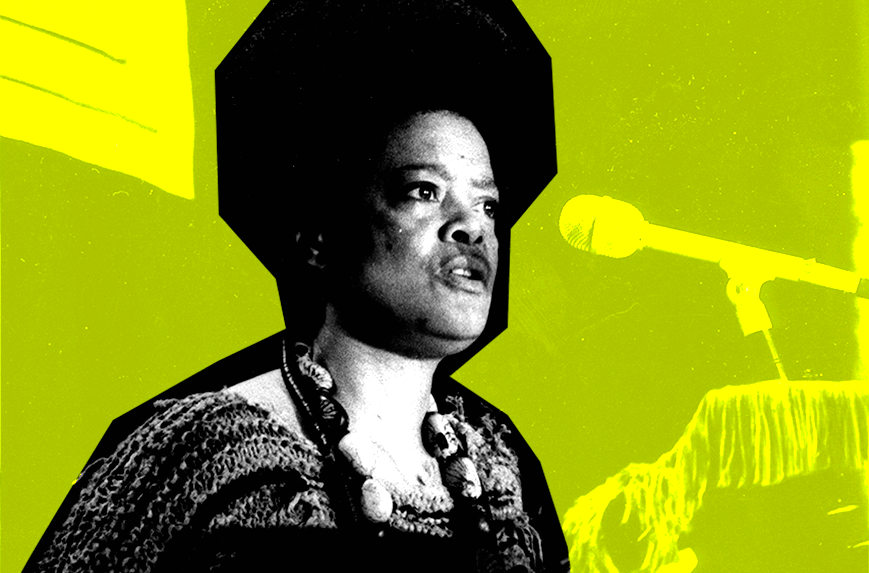
![A Black woman speaking at a podium with a microphone, wearing a necklace and a patterned top, against a bright yellow background.]()
The Writer as Cultural Worker (1982) Interview
TONI CADE BAMBARA
-
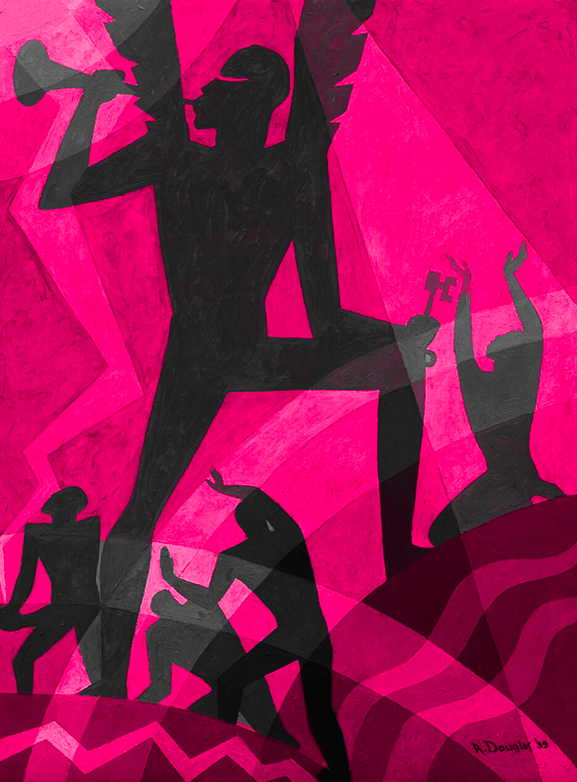
![Silhouette artwork of five dancers against a pink background with geometric shapes, created by A. Douglass in 1933.]()
Criteria For Black Art
W.E.B. DUBOIS
-
![A black and white photo of a group of people sitting in a circle in an art gallery or museum, with large portraits of prominent figures on the wall behind them.]()
Manifesto of the Union of Technical Workers, Painters, and Sculptors
MEXICO – 1922
-
![A black and white photo of a man and woman smiling and taking a selfie together, with the woman wearing a short-sleeved shirt and the man wearing a hat. Other people are visible in the background.]()
For An Imperfect Cinema (1971)
JULIO GARCIA ESPINOSA
-
![Paul Robeson Testimony 1948]()
The Artist Must Take Sides: Testimony at the Senate
PAUL ROBESON
-
![A group photo of eleven men in an art gallery with colorful artwork on the walls. The photo is in black and white, with a yellow overlay and some handwritten text that reads "Afro-Colon Artist".]()
The AfriCOBRA Manifestos: Ten In Search of A Nation (1970)
AFRICOBRA
-
![A black and white photo of two men standing in front of a crowd of children and adults outside a building, with green and white digital overlays.]()
Aesthetics of Hunger (1965) & Dreaming (1971)
GLAUBER ROCHA
-
![A Black man with a beard and afro hairstyle speaking passionately at a podium with multiple microphones, in front of a large crowd, with some holding protest signs in the background.]()
The Revolutionary Theater (1965)
AMIRI BARAKA
-
![A group of diverse people, mostly women, standing together for a photo in front of a wooden wall. The image is in black and white.]()
Towards a People's Art: The Harlem Artists Guild
GWENDOLYN BENNETT


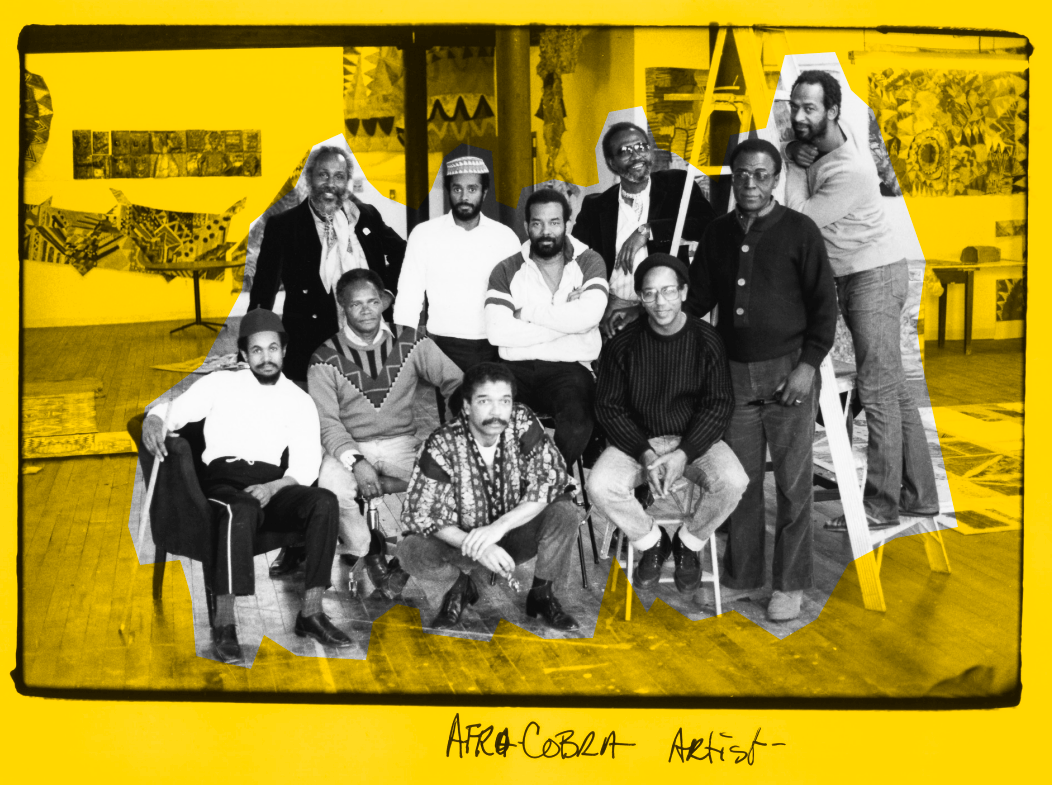

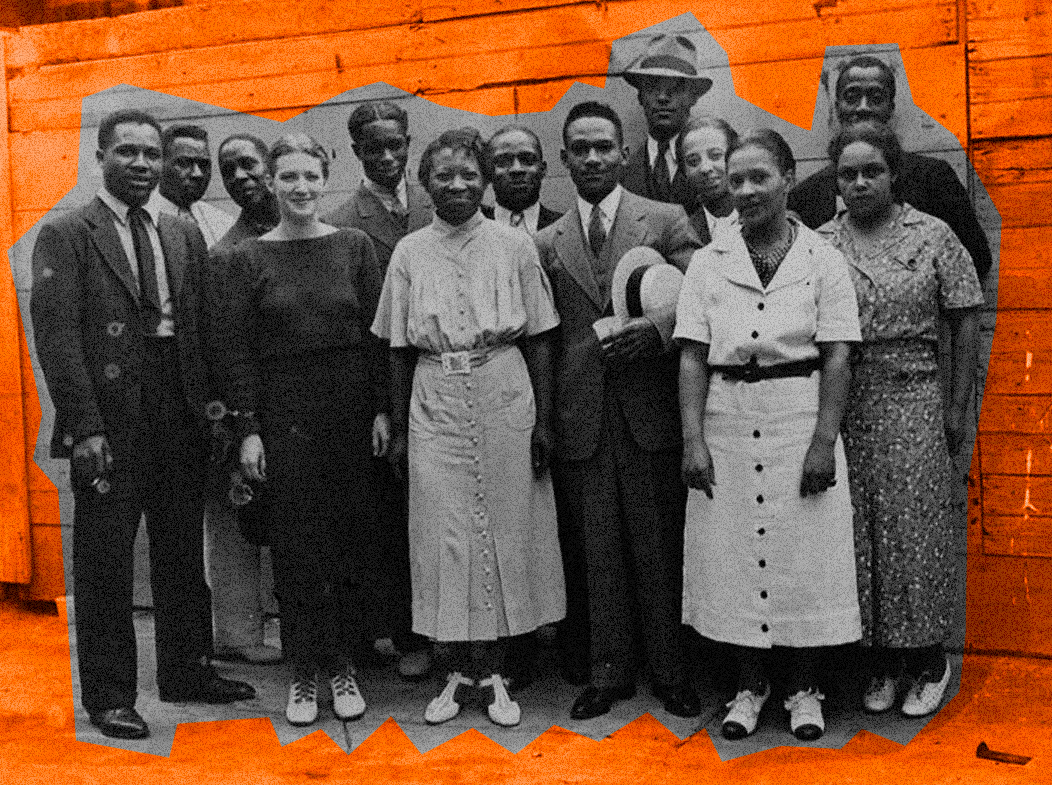
The Harlem Arts Guild
Gwendolyn Bennett
The Harlem Artists Guild emerged in 1935 at the intersection of art, labor, and anti-racist struggle, organizing Black artists as part of a broader united front for economic security, cultural power, and political rights. Gwendolyn Bennett’s 1937 report captures this formative moment, revealing how Black artists built institutions, demanded federal employment, and fought collectively to claim their place in a society structured against them.
The Artist Must Take Sides
Paul Robeson
Challenging the growing fervor of the Second Red Scare, Robeson delivers powerful testimony in opposition to the repressive Mundt-Nixon Communist Registration Bill.
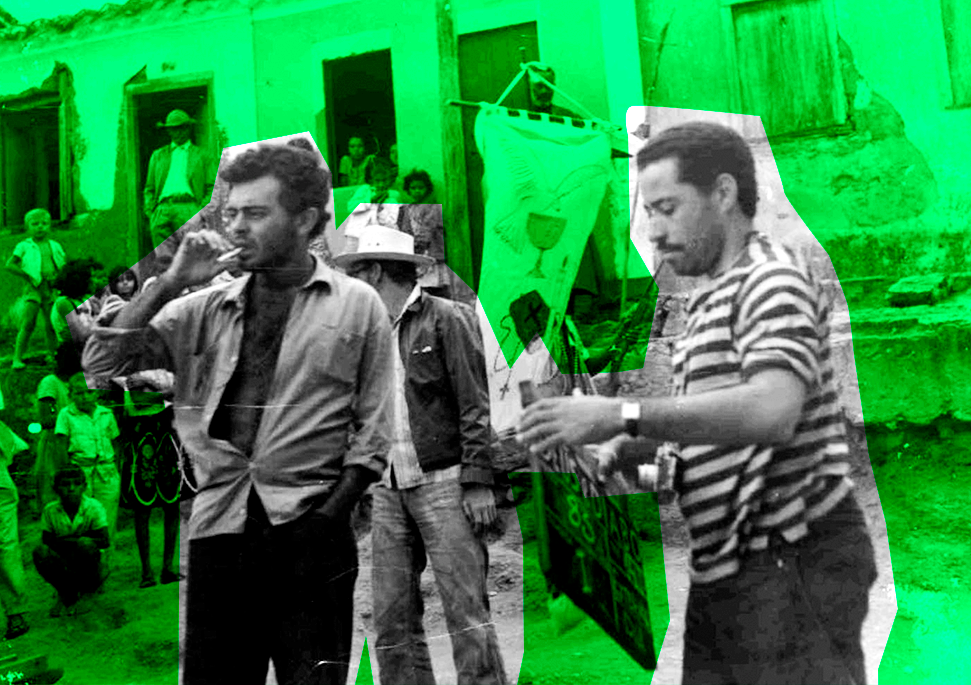
Aesthetics of Hunger (1965) and Dreaming (1971)
Glauber Rocha
Rocha’s paired essays call for a revolutionary Latin American cinema that emerges from hunger, dreams, and the political imagination of the oppressed.
Manifesto of the Union of Technical Workers, Painters, and Sculptors
Mexico – 1922
A 1923 revolutionary declaration calling for collective public art in service of workers, peasants, and Indigenous communities, rooted in the early muralist movement that later shaped artists like Frida Kahlo.
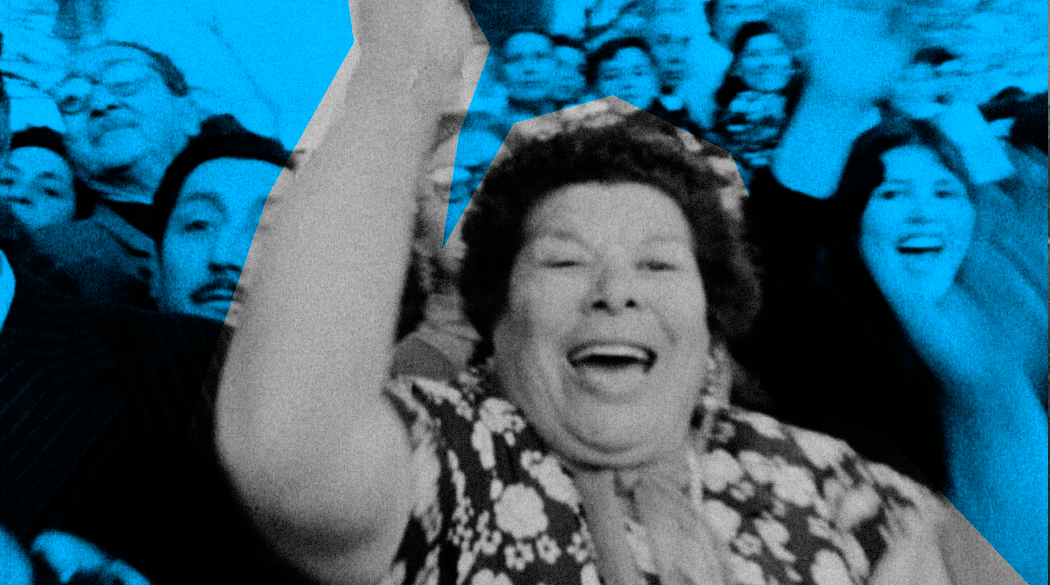
Toward A Third Cinema
Fernando Solanas and Octavio Getino
First published in 1969 in the Cuban journal Tricontinental, “Toward a Third Cinema” emerged from the militant work of Argentine filmmakers Fernando Solanas and Octavio Getino, members of the clandestine Grupo Cine Liberación. Writing amid dictatorships and anti-imperialist struggle across the Global South, they rejected Hollywood’s profit-driven model and called for a revolutionary cinema rooted in collective production, political clarity, and solidarity with the peoples of Asia, Africa, and Latin America.
Julio García Espinosa
Espinosa’s 1971 essay argues for a revolutionary “imperfect cinema” that rejects bourgeois polish and empowers the people as creators of their own culture.
For An Imperfect Cinema (1971)

Criteria of Black Art (1926)
W.E.B. DuBois
Du Bois’s classic 1926 essay insists that Black art is inseparable from the struggle for freedom and must serve truth, beauty, and justice.
The Artist As Cultural Worker (1982) Interview
Toni Cade Bambara
Bambara’s 1982 interview reveals her vision of the writer as a cultural worker whose craft transforms lived experience into stories that heal, organize, and make revolution irresistible.