

Art for the People’s Sake (1970)
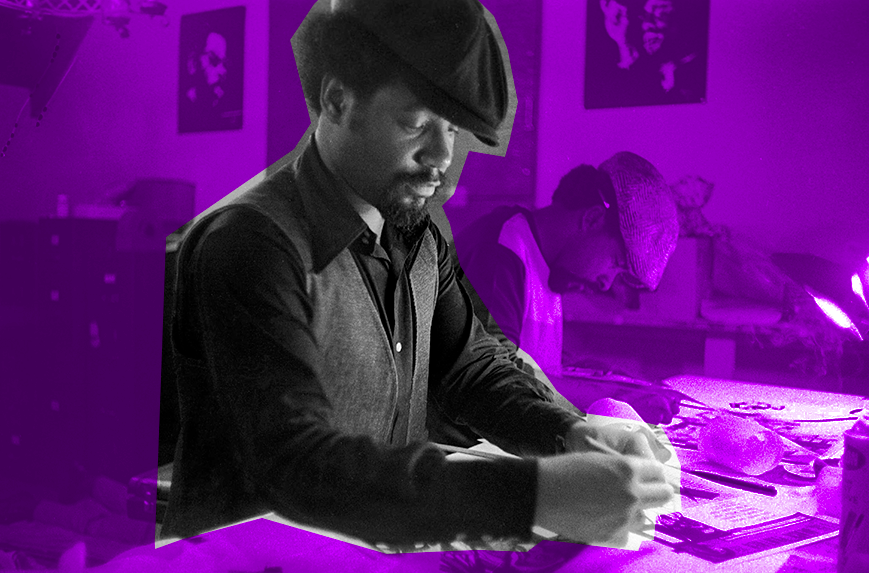
Emory Douglas
In On Revolutionary Art and Art for the People’s Sake, published in The Black Panther in 1970 and 1972, Emory Douglas lays out a powerful vision of art as an essential weapon in the struggle for Black liberation. Writing from within the Black Panther Party, Douglas rejects the idea of art as neutral, decorative, or detached from social reality. Instead, he insists that revolutionary art is a responsibility and a duty, inseparable from the political struggle of the people. Art must flow from lived experience and speak directly to the conditions of oppression, resistance, and survival.
Douglas argues that revolutionary art belongs to the people, not to galleries or elite institutions. He emphasizes mass accessibility, urging artists to place their work in the streets, storefronts, and everyday spaces where people live and move. Drawing from the visual language of commercial advertising, Douglas calls for repurposing its structure while transforming its content to serve liberation rather than exploitation. In this way, art becomes a tool for education, consciousness-raising, and collective empowerment.
Across both texts, Douglas makes clear that art is subordinate to politics, and politics begins with material conditions such as hunger, housing, and state violence. The artist’s role is not to observe from a distance but to remain deeply rooted among the people, listening, learning, and reflecting their struggles and aspirations. For Douglas, revolutionary art exposes oppression, celebrates resistance, and helps people see themselves as the agents of their own liberation. These writings remain foundational for understanding how cultural work functions as a vital force in movements to build another world.
Art for the People’s Sake + On Revolutionary Art
Emory Douglas
Published in the Black Panther, Berkeley. January 24th, 1970.
ON REVOLUTIONARY ART
Revolutionary Art does not demand any more sacrifice from the revolutionary artist than what is demanded from a traitor (Negro) who draws for the oppressor. Therefore, the creation of revolutionary art is not a tragedy, but an honour and duty that will never be refused. Revolutionary Art begins with the programme that Huey P. Newton instituted with the Black Panther Party.
Revolutionary Art, like the Party, is for the whole community and its total problems. It gives the people the correct picture of our struggle, whereas the Revolutionary Ideology gives the people the correct political understanding of our struggle. Before a correct visual interpretation of the struggle can be given, we must recognise that Revolutionary Art is an art that flows from the people. It must be a whole and living part of the people's lives, their daily struggle to survive.
To draw about revolutionary things, we must shoot and/or be ready to shoot when the time comes. In order to draw about the people who are shooting, we must capture the true revolution in a pictorial fashion. We must feel what the people feel who throw rocks and bottles at the oppressor so that when we draw about it - we can raise their level of consciousness to hand grenades and dynamite to be launched at the oppressor. Revolutionary Art gives a physical confrontation with tyrants, and also enlightens the people to continue their vigorous attack by educating the masses through participation and observation.
Through the Revolutionary Artist's observations of the people, we can picture the territory on which we live (as slaves): project maximum damage to the oppressor with minimum damage to the people, and come out victorious. The Revolutionary Artist's talents are just one of the weapons he uses in the struggle for Black People. His art becomes a tool for liberation. Revolutionary Art can thereby progress as the people progress because the People are the backbone to the Artist and not the Artist to the People.
To conceive any type of visual interpretations of the struggle, the Revolutionary Artist must constantly be agitating the people, but before one agitates the people, as the struggle progresses, one must make strong roots among the masses of the people. Then and only then can a Revolutionary Artist renew the visual interpretation of Revolutionary Art indefinitely until liberation. By making these strong roots among the masses of the Black People, the Revolutionary Artist rises above the confusion that the oppressor has brought on the colonised people, because all of us (as slaves) from the Christian to the brother on the block, the college student and the high-school drop out, the street walker and the secretary, the pimp and the preacher, the domestic and the gangster: all the elements of the ghetto can understand Revolutionary Art.
The ghetto itself is the gallery for the Revolutionary Artist's drawings. His work is pasted on the walls of the ghetto; in storefront windows, fences, doorways, telephone poles and booths, passing buses, alleyways, gas stations, barber shops, beauty parlours, laundromats, liquor stores, as well as the huts of the ghetto. This way the Revolutionary Artist educates the people as they go through their daily routine, from day to day, week to week, and month to month. This way the Revolutionary Artist cuts through the smokescreens of the oppressor and creates brand new images of Revolutionary action - for the total community.
Revolutionary Art is an extension and interpretation to the masses in the most simple and obvious form. Without being a revolutionary and committed to the struggle for liberation, the artist could not express revolution at all. Revolutionary Art is learned in the ghetto from the pig cops on the beat, demagogue politicians and avaricious businessmen. Not in the schools of fine art. The Revolutionary Artist hears the people's screams when they are being attacked by the pigs. They share their curses when they feel like killing the pigs, but are unequipped. He watches and hears the sounds of footsteps of Black People trampling the ghetto streets and translates them into pictures of slow revolts against the slave masters, stomping them in their brains with bullets, that we can have power and freedom to determine the destiny of our community and help to build 'our world'. Revolutionary Art is a returning from the blind, where we no longer let the oppressor lead us around like watchdogs.
ART FOR THE PEOPLE’S SAKE
ALL POWER TO THE PEOPLE, I'm very happy to be here as a representative from the Black Panther Party. Tonight, I would like to discuss with you the relationship of the Black artist to the Black community.
We must take that as a very serious thing, because when we look at the world today, we see that we have very serious problems. We have to understand that we have been duped into believing that we are supposed to criticise all the Greek, the Roman and all the ancient European art.
We have been taught how to criticise them; we have been told how to criticise them. But what happens when we criticise them? We begin to try to duplicate them. We begin to spend our time in trying to copy something that is old, that is decadent, that is out of date... like the work of Leonardo Da Vinci, and those other painters.
But we have a greater enemy in relationship to art. We have a greater enemy, I would say, in commercial art. What is commercial art? It is a method of persuasion, mind control; it oppresses Black people. If we look around our community, what do we see? We see billboards, with advertising, that tell us what to buy, how to buy. And we go out and buy... our own oppression. It (advertising) tells us to go out and buy a house, for 6% interest; we buy the house and suffer for the next twenty years trying to pay for that house.
What am I trying to tell you? It's this: we have to take that structure of commercial art and add a brand new content to it, a content that will serve the interests of the Black people. We see that they (the capitalists) have done what we should be doing. They have analysed how to appeal to the Black people, so that Black people will go out and buy. They have begun to analyse how to relate to Black people so that we will continue to suffer - peacefully.
But we say that if we take this structure of commercial art and add a brand new content to it, then we will have begun to analyse Black people and our situation for the purpose of raising our consciousness to the oppression that we are subjected to. We would use commercial art for the purpose of educating Black people, not oppressing them.
So I made that statement, in the beginning so that perhaps I could get off into an outline with a few questions in regards to who art is for. I would say that art is for the masses of Black people; we must bombard the masses with art. We cannot do this in the art gallery, because our people do not go to art galleries; we can't afford to go to art galleries... We have to put our art all over the United States, wherever Black people are. If we're talking about an art that serves our people, if we're truly talking about an art that is in the interests of Black people, then we have to use, again, the structure of commercial art.
Isn't it true, that wherever you look, all over the country, you see billboards selling a product? Isn't it true, that whenever you look in a magazine, it's selling a product? Why can't we use that same structure, in relationship to ourselves, to raise the consciousness of Black people; in regards to using our art in that same form; putting it into posters, thousands of posters, so that they can be distributed, so all Black people across the country can get the message...
We also have the question of how to define art (for ourselves)? Many would say that we define art from a dictionary, but we know that the problems are too complicated, too complex, to define art from a dictionary. We cannot even define art by a board of directors. We say that art is defined by the people, because the people are the ones who make art. If we are truly drawing the people; if we are trying to reflect the society which we live in, then that means that we, the artists, will draw the people; but the people are the real artists.
No artist can sit in an ivory tower, discussing the problems of the day, and come up with a solution on a piece of paper. The artist has to be down on the ground; he has to hear the sounds of the people, the cries of the people, the suffering of the people, the laughter of the people - the dark side and the bright side of our lives.
The dark side is the oppression, the suffering, the decadent living, which we always expose. But the bright side is that which we praise; beautiful Black people who are rising up and resisting. There is a difference between exposing and praising.
We don't expose the system (of the Us) in relationship to art, but, we praise the people in relationship to art. We show them as the heroes, we put them on the stage. We make characters of our people (around the idea of what they know life should be about).
We can talk about politics in art, and many people will get confused on the issue, in regard to what is primary. Is it the political situation, or the artistic situation? Art is subordinate to politics. The political situation is greater than the artistic situation. A picture can express a thousand words but action is supreme. Politics is based on action, politics starts with a hungry stomach, with dilapidated housing.
Politics does not start in the political arena, it starts right down there in the community, where the suffering is. If art is subordinate, then, to the political situation, wouldn't it be true that the artist must begin to interpret the hungry stomach, bad housing, all of these things and transform these things into something that would raise the conciousness of Black people? I think that would be the most logical thing to do.
In regard to criticism in art: We praise all that which helps us in our resistance, for future liberation. We condemn all those things in art that are opposed to our liberation. If we, as artists, do not understand our role and relationship to the society, to the political situation and the survival of Black people, then how can we create art that will project survival? How can we begin to create an art that shows a love — a true love - for Black people? When the artist begins to love the people, to appreciate them, he or she will begin to draw the people differently; we can begin to interpret and project into our art something that is much greater than it was before: freedom, justice, liberation; all those things that we could not apply to our art before.
How do we judge art... By the subjective intentions of the person (the motive)? Or do we judge art by the effect it has? We have to take both of these things into consideration. The motive is the idea; the idea that I believe a drawing should be drawn in a particular manner is only my personal thought. So, what I have to do is take into consideration, if the art is going to correspond to what's happening in the community. If it is going to elevate the level of the consciousness of Black people in the community.
That means that I have to go out into the community and investigate in order to find if what I want to draw is going to correspond with the reality of the community. Then I will be taking into consideration, not only my motive, which is my own personal feeling, but I would also be taking into consideration the effect; the actual, practical everyday activity that goes on in the community. We have to link up the two... You see, another thing that the reactionary system does, is to carry on a pacification programme by using art.
They tell us that we should not draw things that deal with liberation, that we should not draw things that deal with violence. But at the same time they perpetrate the worst violence on the planet Earth while they have us drawing pictures of flowers and butterflies. We must understand, that when there are over 20 million people in this country, hungry, then we, as artists, have something we must deal with...
To further explore the relationship between art, politics, and mass struggle, readers may turn to writings from the Black Panther Party and its broader cultural ecosystem, including Huey P. Newton’s reflections on revolutionary consciousness and the role of survival programs in building people’s power. The essays and speeches of Amiri Baraka on revolutionary theatre and cultural responsibility deepen Douglas’s insistence that art must be inseparable from political commitment. Internationally, Amílcar Cabral’s National Liberation and Culture and the cultural statements of the Medu Art Ensemble in South Africa offer parallel frameworks for understanding art as a weapon in anti-imperialist and socialist struggles. Together, these works expand the vision of revolutionary culture as a collective practice rooted in the lives of the people.